Sunday, 25 June 2017

Thursday, 15 June 2017
Research: Magazine Advert Analysis
Mumford & Sons - Sigh No More (Oct 2009)

The White Stripes - Under Great White Northern Lights (Mar 2010)

Online

Targeting Audiences
Different genres of music target their audience in different ways. I think this is in order to reach as many of their fans as possible and many different genres use different ways to achieve this. Many genres have their own magazines that specialise in their genre of music and appeals to the mass fanbase, for example Kerrang is a Rock/Metal magazine that specialises in focusing on rock orientated music and bands - they include different albums from a range of bands that span the whole genre. Other genres for example Indie music might not have this so they might promote their genre of music through television - for example many indie bands/artists are found to promote their music through a television programme called 'Sunday Brunch', where they have specific sections throughout the show where they have different bands/artists perform their music and it is mostly smaller/less well-known Indie bands/artists - this can help to create a target audience or help the band/artist expand their target audience as this is one of the largest shows on the tv during the morning on a Sunday.
Saturday, 10 June 2017
Research: Digipaks
What is a Digipak?

A type of packaging for CDs or DVDs, typically made from cardboard with an internal plastic holder for one or more discs. It is a marketing tool intended to offer the buyer an incentive for purchasing the hard copy from a high street or online retailer than downloading/streaming the music. The incentive is basically extras added to the CD in addition to the actual disk and its case with front and back covers.
What is the layout of a Digipak?
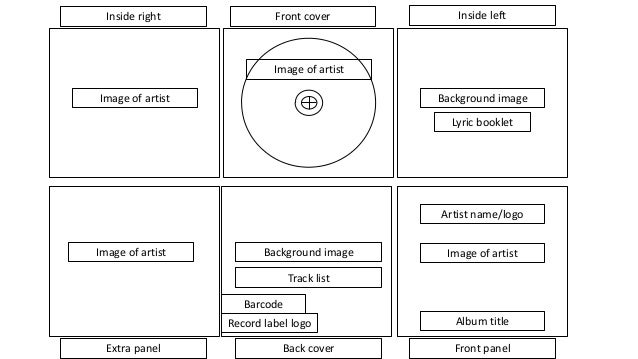
6 Panel Digipak
Advantages
- The fact that there is multiple panels means that the digipak can be 'filled' with more extra content that can encourage more fans to buy the product, maybe also people that has just started to listen to the band.
- There can be more exclusive artwork within the digipak which helps to enhance the experience for the fans that buy the product.
Disadvantages
- The 'extra' panels can make this digipak quite thick, in a sense that if fans wanted to place these on a shelf with other digipaks/CD's these types of digipaks would take up quite a lot of shelf space.
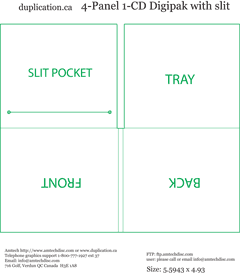
4 Panel Digipak
Advantages
- The fact that it is 4 panels shows that it can be compact - which appeals to fans that are avid collectors of CD's as they can help to fit on people's shelves or in a place where they keep their CD collection.
Disadvantages
- Due to the fact that this is only four panels this limits the amount of content that can be placed within the digipak is limited - which doesn't really encourage fans to buy this as they aren't really getting their value for money - there wouldn't be any point so they instead buy either the digital download copy or stream it.
Digipaks include:
- A Front Cover
- A Back Cover
- A Spine
- At least four other panels within the Digipak itself
The Additional will comprise of some or all of these things:
- Membership Postcard/Flier
- Lyric Section
- Disk Impression
- Band Info Section/Booklet
- Free Image/Poster/Set of Postcards
Retailers
HMV (Online/High-Street Retailer)
 Amazon (Online Retailer)

Examples of Digipaks


Digipak Analysis: Wu Tang Clan - Enter the Wu Tang - 36 Chambers (1993)


- A Front Cover
- A Back Cover
- A Spine
- At least four other panels within the Digipak itself
The Additional will comprise of some or all of these things:
- Membership Postcard/Flier
- Lyric Section
- Disk Impression
- Band Info Section/Booklet
- Free Image/Poster/Set of Postcards
Retailers
HMV (Online/High-Street Retailer)


Examples of Digipaks
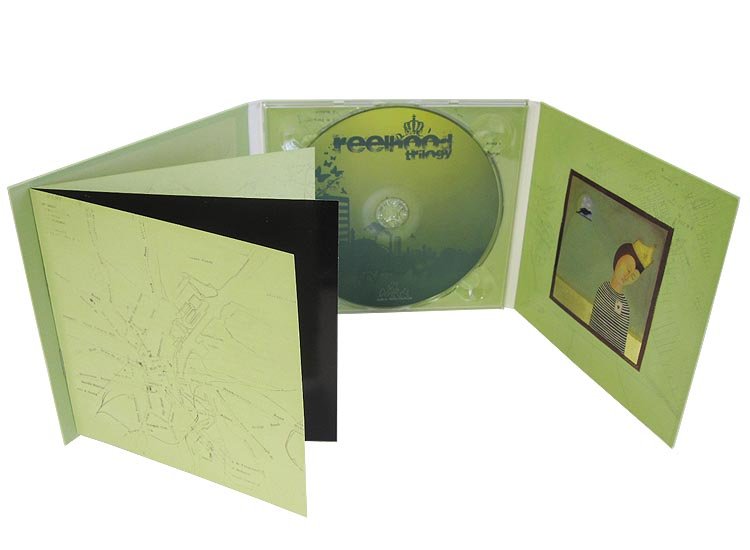

Digipak Analysis: Wu Tang Clan - Enter the Wu Tang - 36 Chambers (1993)


Tuesday, 17 January 2017
Preliminary Task - Continuity Editing
Original Video
Brief
We were tasked to produce a short film that showed specific skills and actions. We were informed that the film would need to show continuity editing, match on action, 180 degree rule and shot reverse shot. These were included in our short film.
Match on action
This is where one shot seemlessly cuts to another. Here we can see the character walk through the door and then the camera cuts to the inside where we see the character walk through the door on the other side.
180 degree rule
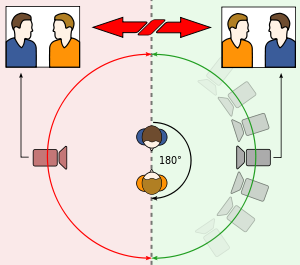
The 180 degree rule is where the camera stays on one side of a conversation so it wouldn't interupt the flow of the conversation and also wouldn't confuse the audience as the characters don't change sides. We used the 180 degree rule with shot reverse shot. Shot reverse shot is when the camera switches between two characters while they are in conversation with each other.
180 degree rule

Pre-Production
Due to the fact that we had such a small amount of time for this task we had very limited planning and the Pre-Production was very quick and rushed.
Storyboard
Due to the short time frame we were unable to create a storyboard for our preliminary task so we decided on an idea and put it together before we started shooting the task for real.
An example would be like this:

Story
Initially we decided to do a horror, psychological narrative but during the filming stage we found that a more romantic comedy style would work better with the footage that we had shot already. On the way back from filming we decided with the footage we had how we would edit it together to look more like a romantic comedy.
Location
Due to the fact we were limited to our school grounds, we suggested using locations which were familiar to us so we could get the scenes shot quickly and that we prioritised finding a few locations which would be noticeably quieter. This led us to use the main strip in the car parking area and the toilets within one of our school blocks. This enabled us to adapt our script and story to the surroundings so we could get the perfect shots for shooting the footage.
Original Video
Brief
We were tasked to produce a short film that showed specific skills and actions. We were informed that the film would need to show continuity editing, match on action, 180 degree rule and shot reverse shot. These were included in our short film.
Match on action
This is where one shot seemlessly cuts to another. Here we can see the character walk through the door and then the camera cuts to the inside where we see the character walk through the door on the other side.
180 degree rule
The 180 degree rule is where the camera stays on one side of a conversation so it wouldn't interupt the flow of the conversation and also wouldn't confuse the audience as the characters don't change sides. We used the 180 degree rule with shot reverse shot. Shot reverse shot is when the camera switches between two characters while they are in conversation with each other.
180 degree rule
Shot Reverse Shot

Due to the fact that we had such a small amount of time for this task we had very limited planning and the Pre-Production was very quick and rushed.
Storyboard
Due to the short time frame we were unable to create a storyboard for our preliminary task so we decided on an idea and put it together before we started shooting the task for real.
An example would be like this:
Story
Initially we decided to do a horror, psychological narrative but during the filming stage we found that a more romantic comedy style would work better with the footage that we had shot already. On the way back from filming we decided with the footage we had how we would edit it together to look more like a romantic comedy.
Location
Due to the fact we were limited to our school grounds, we suggested using locations which were familiar to us so we could get the scenes shot quickly and that we prioritised finding a few locations which would be noticeably quieter. This led us to use the main strip in the car parking area and the toilets within one of our school blocks. This enabled us to adapt our script and story to the surroundings so we could get the perfect shots for shooting the footage.
Sunday, 4 December 2016
Research: Film Openings- Institutional
Film 1: 'Batman' (1989, Burton)

 -The use of having the distribution company at the start of the opening it encourages people to see the film because if the audience notices a well-known distributor then they are more likely to see the film. -The text for the institutional titles and the main title are in a normal font, but in the yellow colour, this hints the batman logo and colours, the yellow text also juxtaposes with the dark background, emphasising the title of the film and the people who have been involved in the production process of making this film.
-The Batman theme is heard playing throughout of the opening, suggesting it's debut and orchestration specifically for this film.
-Throughout the opening the soundtrack has periods of builds and fades/slows, coupled with the different transitions within the images (so with fast paced build of the soundtrack the images transition speeds up and this is the opposite for the slow paced sections of the soundtrack).
-For the visuals, there really isn't much to show as it is just a dark transition of the logo, close up, until the very end when it shows the full Batman logo.
-The build ups create a sort of action, intense atmosphere which gets people to start to look forward to the film.
-The main title of the film and other titles are centred in the frame, it tries to emphasise the main title and the people involved in making this film happen.
-In this opening there is 27 institutional titles which suggests to us as the audience that this is a big budget film which has had a lot of effort put into the making of this film due to the large number of institutional titles.
-For this opening it only has one camera transition, which is like a panning shot of a close-up of the Batman logo, this gets the audience to wonder what the film is about, thus getting people wanting to know what more of the narrative is, therefore they sit and watch the rest of the film to know what the narrative is.
- Orchestral sound is used heavily through the opening for this film, especially when the batman theme was specifically composed for the film, makes the film more memorable for the audience.
Film 2: 'Blade 2' (2002. Del Toro)

 - For Blade 2 the institutional line is quite sparse, with only 4 institutional titles throughout the opening, this could be because the film makers want people to focus more on the voice over and the visuals more than the text, to get people to be excited for the rest of the film, plus it fills in the narrative for people who cannot remember the events of the first film or to fill in the narrative for people who may not have seen the first film.
- Throughout the opening the main theme for blade plays while also having Blade's voice over for the majority of the opening, which fills in the narrative for the audience.
- Other pieces of audio are really just sound effects which enhance the experience to make it sound more realistic for the audience.
- The Visuals as mainly made up of scenes from the pervious film, thus allowing the audience to familiarise themselves with the narrative of the film.
- Other visuals include the use of different weapons (props) which suggests that he is getting ready for a battle, resulting in the audience deducing that this is a action film, coupled with a pinch of horror, due to the bloody clips and the voice over.
-The main title for this film is in the centre of the frame this shows the title of the film clearly, a grabs the audience's attention onto the man title.
-This uses a mixture of moving and still images which help to show the narrative and characterisation.
- The use of gram negative filters on some scenes within the opening create a sense of horror for the audience.
- The use of many props within the opening helps to set the genre for the rest of the film resulting in the audience thinking that this is an action film.
Group film opening analysis
'The Conjuring' (2013, Wan)


- In this opening throughout the soundtrack is quite eerie, thus creating an uncomfortable feel for the audience, therefore adding to the sense of horror.
- Also for the audio in the opening, in certain places a sound is added for roughly a second suddenly (For example a crow or a door bell or a door opening), resulting in a scary atmosphere.
- For the visuals it shows old newspaper articles, which adds to the sense of realism to which the audience can relate to and gets the audience to believe that this actually happened.
- For institutional titles, there are 17 in all in which show mostly the actors names and the director's name which is shown twice, both at the beginning of the opening and the end, to show who the director is.
- In some sections the music builds which creates a more intense atmosphere, which makes the viewing experience more uncomfortable for the audience, thus enhancing the horror feeling, which the film and the director is hoping to achieve, for the film to be successful.
- This opening uses mostly still images, but for the turning of news article pages they use a moving images to give it a sense of realism of actually turning the pages of the article.
- Throughout the opening the producers are given a mention especially the executive producers.
- The visuals throughout (the newspaper articles) create the narrative of the film by showing he audience past events before the film's proper beginning, this is also hinted towards the end with the still image of the tree and the large farm house in the background, with a noose tied to one of the branches of the tree, resulting in the audience suspecting the most recent past narrative or this could hint events that are to come later in the film, it gets the audience to start to guess whether this is a past or future reference.
- Different props are used to convey a horror tone for example a Ouija board is used in one of the clips, this is usually associated with horror scenes, this gets the audience to experience the horror aspect of this opening.
General sense from film openings- what the audience experiences in general, what ideas they are given.
From film openings the audience can get a sense of the idea of what the film would be about without having to see the whole film to the end to get the sense of narrative. Also the audience can check to see which production companies are involved to see whether any well-known companies have been used to make this film happen. Moreover the audience can see who actually is directing it, because a well-known director can get people to watch the rest of the film, plus not question what is happening (in this section of the film), as people would be sort of familiar with their work. Finally the audience can see who is actually starring in this film, this can form opinions for many viewers, as different actors/actresses are right for specific roles. Film openings establish quite a few things for the audience. It can establish:
- Location of film
- Characters
- Narrative of the film
- Title, Credits
- Genre
- Tone/Atmosphere
Film 1: 'Batman' (1989, Burton)


-The Batman theme is heard playing throughout of the opening, suggesting it's debut and orchestration specifically for this film.
-Throughout the opening the soundtrack has periods of builds and fades/slows, coupled with the different transitions within the images (so with fast paced build of the soundtrack the images transition speeds up and this is the opposite for the slow paced sections of the soundtrack).
-For the visuals, there really isn't much to show as it is just a dark transition of the logo, close up, until the very end when it shows the full Batman logo.
-The build ups create a sort of action, intense atmosphere which gets people to start to look forward to the film.
-The main title of the film and other titles are centred in the frame, it tries to emphasise the main title and the people involved in making this film happen.
-In this opening there is 27 institutional titles which suggests to us as the audience that this is a big budget film which has had a lot of effort put into the making of this film due to the large number of institutional titles.
-For this opening it only has one camera transition, which is like a panning shot of a close-up of the Batman logo, this gets the audience to wonder what the film is about, thus getting people wanting to know what more of the narrative is, therefore they sit and watch the rest of the film to know what the narrative is.
- Orchestral sound is used heavily through the opening for this film, especially when the batman theme was specifically composed for the film, makes the film more memorable for the audience.
Film 2: 'Blade 2' (2002. Del Toro)


- Throughout the opening the main theme for blade plays while also having Blade's voice over for the majority of the opening, which fills in the narrative for the audience.
- Other pieces of audio are really just sound effects which enhance the experience to make it sound more realistic for the audience.
- The Visuals as mainly made up of scenes from the pervious film, thus allowing the audience to familiarise themselves with the narrative of the film.
- Other visuals include the use of different weapons (props) which suggests that he is getting ready for a battle, resulting in the audience deducing that this is a action film, coupled with a pinch of horror, due to the bloody clips and the voice over.
-The main title for this film is in the centre of the frame this shows the title of the film clearly, a grabs the audience's attention onto the man title.
-This uses a mixture of moving and still images which help to show the narrative and characterisation.
- The use of gram negative filters on some scenes within the opening create a sense of horror for the audience.
- The use of many props within the opening helps to set the genre for the rest of the film resulting in the audience thinking that this is an action film.
Group film opening analysis
'The Conjuring' (2013, Wan)
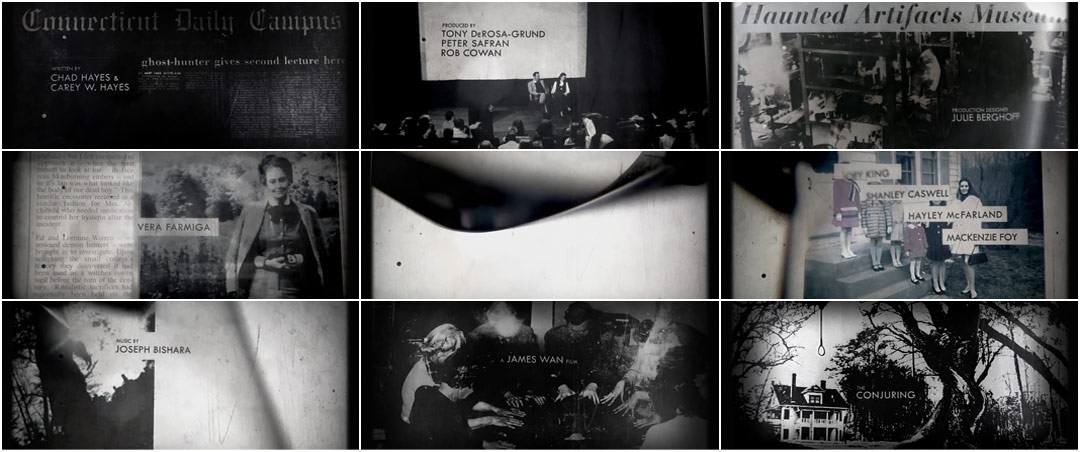


- In this opening throughout the soundtrack is quite eerie, thus creating an uncomfortable feel for the audience, therefore adding to the sense of horror.
- Also for the audio in the opening, in certain places a sound is added for roughly a second suddenly (For example a crow or a door bell or a door opening), resulting in a scary atmosphere.
- For the visuals it shows old newspaper articles, which adds to the sense of realism to which the audience can relate to and gets the audience to believe that this actually happened.
- For institutional titles, there are 17 in all in which show mostly the actors names and the director's name which is shown twice, both at the beginning of the opening and the end, to show who the director is.
- In some sections the music builds which creates a more intense atmosphere, which makes the viewing experience more uncomfortable for the audience, thus enhancing the horror feeling, which the film and the director is hoping to achieve, for the film to be successful.
- This opening uses mostly still images, but for the turning of news article pages they use a moving images to give it a sense of realism of actually turning the pages of the article.
- Throughout the opening the producers are given a mention especially the executive producers.
- The visuals throughout (the newspaper articles) create the narrative of the film by showing he audience past events before the film's proper beginning, this is also hinted towards the end with the still image of the tree and the large farm house in the background, with a noose tied to one of the branches of the tree, resulting in the audience suspecting the most recent past narrative or this could hint events that are to come later in the film, it gets the audience to start to guess whether this is a past or future reference.
- Different props are used to convey a horror tone for example a Ouija board is used in one of the clips, this is usually associated with horror scenes, this gets the audience to experience the horror aspect of this opening.
General sense from film openings- what the audience experiences in general, what ideas they are given.
From film openings the audience can get a sense of the idea of what the film would be about without having to see the whole film to the end to get the sense of narrative. Also the audience can check to see which production companies are involved to see whether any well-known companies have been used to make this film happen. Moreover the audience can see who actually is directing it, because a well-known director can get people to watch the rest of the film, plus not question what is happening (in this section of the film), as people would be sort of familiar with their work. Finally the audience can see who is actually starring in this film, this can form opinions for many viewers, as different actors/actresses are right for specific roles. Film openings establish quite a few things for the audience. It can establish:
- Location of film
- Characters
- Narrative of the film
- Title, Credits
- Genre
- Tone/Atmosphere
Sunday, 27 November 2016
Hollywood blockbuster out this christmas
'Rogue One a Star wars story' (2016, Edwards)
Release Date: 16th December 2016


Premise
After the formation of the Galactic Empire, the Rebel Alliance recruits Jyn Erso (Felicity Jones) to work with a team including Cassian Andor (Diego Luna) to steal the design schematics of the Empire's new superweapon, the Death Star with enough power to blow up an entire planet. (Wikipedia)
Trailers
Trailer 1
Trailer 2
Trailer 3
International trailer 1
Company Credits (IMDB)
Production Companies:
Lucasfilm
Allison Shearmur Productions
Black Hangar Studios (location shooting)
Walt Disney Studios Motion Pictures
Distributors:
Cinecolor Films (2016) (Chile) (theatrical)
Forum Hungary (2016) (Hungary) (theatrical)
Walt Disney Studios Japan (2017) (Japan) (theatrical)
Walt Disney Studios Motion Pictures (2016) (Argentina) (theatrical)
Walt Disney Studios Motion Pictures (2016) (Germany) (theatrical)
Walt Disney Studios Motion Pictures (2016) (UK) (theatrical)
Walt Disney Studios Motion Pictures (2016) (Singapore) (theatrical)
Walt Disney Studios Motion Pictures (2016) (USA) (theatrical)
Visit the Official Site guys!!!!!!!!!!!!!!!
Rogue One Official Website
Cast (IMDB)
Thoughts?
From watching this film recently, I would highly recommend this film especially for people who are avid watchers of the Star Wars Franchise, as they will not be disappointed with what Disney has done. I would also highly recommend this film also for people who have not watched the original trilogy or who haven't watched any of the Star Wars films before as this really doesn't spoil anything for people who haven't seen the original trilogy. The acting by the cast was brilliant with many scenes done perfectly especially Felicity Jones who was portraying the main character in this film.
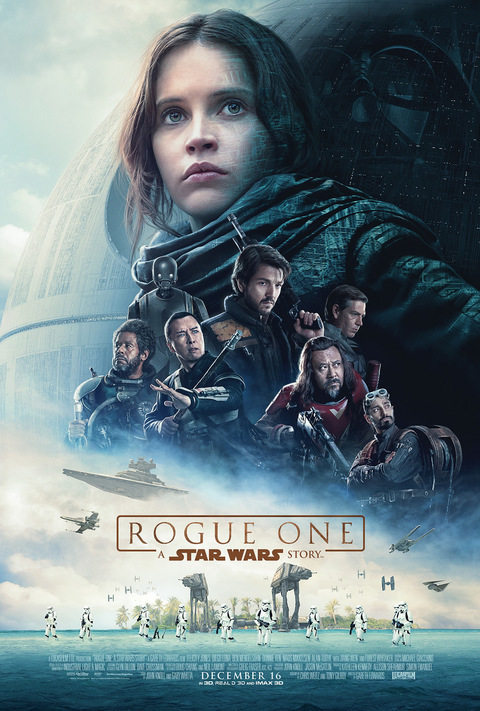
'Rogue One a Star wars story' (2016, Edwards)
Release Date: 16th December 2016

Premise
After the formation of the Galactic Empire, the Rebel Alliance recruits Jyn Erso (Felicity Jones) to work with a team including Cassian Andor (Diego Luna) to steal the design schematics of the Empire's new superweapon, the Death Star with enough power to blow up an entire planet. (Wikipedia)
Trailers
Trailer 1
Trailer 2
Trailer 3
International trailer 1
Company Credits (IMDB)
Production Companies:
Lucasfilm
Allison Shearmur Productions
Black Hangar Studios (location shooting)
Walt Disney Studios Motion Pictures
Distributors:
Cinecolor Films (2016) (Chile) (theatrical)
Forum Hungary (2016) (Hungary) (theatrical)
Walt Disney Studios Japan (2017) (Japan) (theatrical)
Walt Disney Studios Motion Pictures (2016) (Argentina) (theatrical)
Walt Disney Studios Motion Pictures (2016) (Germany) (theatrical)
Walt Disney Studios Motion Pictures (2016) (UK) (theatrical)
Walt Disney Studios Motion Pictures (2016) (Singapore) (theatrical)
Walt Disney Studios Motion Pictures (2016) (USA) (theatrical)
Visit the Official Site guys!!!!!!!!!!!!!!!
Rogue One Official Website
Cast (IMDB)
| Felicity Jones | ||
 | Diego Luna | |
 | Alan Tudyk | |
 | Donnie Yen |
Chirrut Îmwe
|
 | Wen Jiang | |
 | Ben Mendelsohn | |
 | Forest Whitaker | |
 | Riz Ahmed | |
 | Mads Mikkelsen | |
 | Jimmy Smits | |
 | Alistair Petrie | |
 | Genevieve O'Reilly | |
 | Ben Daniels | |
 | Paul Kasey |
Thoughts?
From watching this film recently, I would highly recommend this film especially for people who are avid watchers of the Star Wars Franchise, as they will not be disappointed with what Disney has done. I would also highly recommend this film also for people who have not watched the original trilogy or who haven't watched any of the Star Wars films before as this really doesn't spoil anything for people who haven't seen the original trilogy. The acting by the cast was brilliant with many scenes done perfectly especially Felicity Jones who was portraying the main character in this film.
Tuesday, 18 October 2016
Here is our trial run of filming, here is our extract called 'Spy Mission', check it out we would really appreciate it!
Pre-Production
- Thought of an original concept
- Thought of different characters to fit the narrative
- Thought of the location we wanted to film at
- Traveled to the location we wanted to film at first to see whether it fitted the narrative correctly and whether it gave us the correct space needed to film the section of the extract
- We pitched the roles to each other and issued them accordingly
- Wrote a script to help fit the narrative
- Gathered together equipment that was needed for example camera, tripod and tissue paper
- Drew a storyboard for the narrative
Production
- Filmed at multiple locations
- Used different camera effects to create different themes for example the use of handheld camera gave the audience the sense that they are in the extract with the character
- Used a close-up on the villain's face to make the scene more believable and more personal to the audience making it look as though the villain's attention and gaze is directed towards the audience
- The use of manual focus/zoom during the final scene of the extract to stop the scene becoming blurry due to auto focus/zoom, to allow the final scene to end perfectly.
- Used props to make the extract more believable to the audience
Post- Production
- Use of editing software using IMac's, to join different scenes together to create a more longer video than what was filmed individually
- On the editing software we added sound effects and music in order to give the extract more continuity to create more atmosphere that the scene is already creating
- Proceeded to then upload this to Youtube where we watched the final cut with others and we were able to engage with the audience and acknowledge their reactions to the extract
WWW- We as a group were able to work effectively together and were able to listen to other people's contributions to ideas/concepts about what our extract should consist of. Also we molded the characters from our own preferences and this also helped us to shape our script.
EBI- That we used different filters for the editing process and that we could have used different camera techniques to help enhance the viewing experience for the audience.
Learnt?
I have learnt how to use editing software effectively and I have learnt how to use different camera techniques with different stages of production
I believe that our final product was very intriguing and I had a lot of fun coming up with ideas/concepts and actually help to make this extract a reality. The audience's reaction I noticed when from watching this was that they enjoyed the funnier scenes especially the end scene and that they stayed quiet for most of the extract, therefore suggesting that their attention was directed towards the narrative. This shapes my future production projects as the skills that I have learnt this time I can use for the other projects for example using editing software.
Pre-Production
- Thought of an original concept
- Thought of different characters to fit the narrative
- Thought of the location we wanted to film at
- Traveled to the location we wanted to film at first to see whether it fitted the narrative correctly and whether it gave us the correct space needed to film the section of the extract
- We pitched the roles to each other and issued them accordingly
- Wrote a script to help fit the narrative
- Gathered together equipment that was needed for example camera, tripod and tissue paper
- Drew a storyboard for the narrative
Production
- Filmed at multiple locations
- Used different camera effects to create different themes for example the use of handheld camera gave the audience the sense that they are in the extract with the character
- Used a close-up on the villain's face to make the scene more believable and more personal to the audience making it look as though the villain's attention and gaze is directed towards the audience
- The use of manual focus/zoom during the final scene of the extract to stop the scene becoming blurry due to auto focus/zoom, to allow the final scene to end perfectly.
- Used props to make the extract more believable to the audience
Post- Production
- Use of editing software using IMac's, to join different scenes together to create a more longer video than what was filmed individually
- On the editing software we added sound effects and music in order to give the extract more continuity to create more atmosphere that the scene is already creating
- Proceeded to then upload this to Youtube where we watched the final cut with others and we were able to engage with the audience and acknowledge their reactions to the extract
WWW- We as a group were able to work effectively together and were able to listen to other people's contributions to ideas/concepts about what our extract should consist of. Also we molded the characters from our own preferences and this also helped us to shape our script.
EBI- That we used different filters for the editing process and that we could have used different camera techniques to help enhance the viewing experience for the audience.
Learnt?
I have learnt how to use editing software effectively and I have learnt how to use different camera techniques with different stages of production
I believe that our final product was very intriguing and I had a lot of fun coming up with ideas/concepts and actually help to make this extract a reality. The audience's reaction I noticed when from watching this was that they enjoyed the funnier scenes especially the end scene and that they stayed quiet for most of the extract, therefore suggesting that their attention was directed towards the narrative. This shapes my future production projects as the skills that I have learnt this time I can use for the other projects for example using editing software.
Subscribe to:
Posts (Atom)